Current members : 1650

HOW TO PLAY

THE RULES

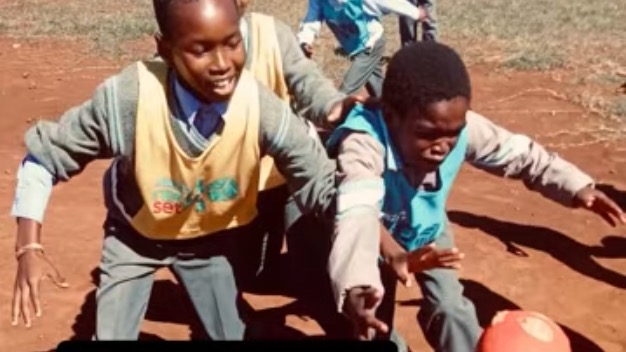
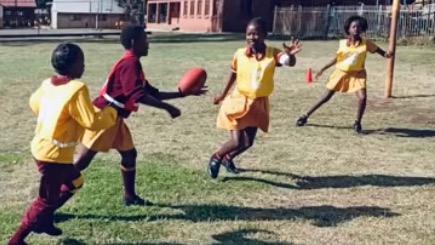
In Australia, where the game first originated in 1858, the game is called Aussie Rules, AFL or more commonly, plain old ‘footy’. In South Africa we call it footyWILD – the new game that roars. The game started ‘down under’ as a winter sporting alternative for Australian cricketers searching for ways to keep fit in the off-season. As a result, the game was played on a cricket oval and has evolved over the last 150 years, to become Australia’s most popular sporting codes. Each year 650,000 participants take to the field and a further 37,000 spectators per game, pile through the gates to watch the big men fly at the highest level. This puts the AFL, second only behind the NFL in America in terms of average attendances, highlighting the enormous attraction of what many believe is one of the most spectacular sports in the world.

For a brief overview on what differentiates this particular football code from the rest, please see below.

AUSTRALIAN FOOTBALL

The object of the game is to score points by kicking the ball between sets of four posts. The middle two are the goal posts and the outside ones are the behind posts. Six points are scored when the ball is kicked between the two middle post without being touched by any player.

A six -point score is called a goal and is signalled by the goal umpire waving two flags overhead. One point (also known as a behind) is scored when the ball passes between a goal post and a behind post (or hits a goal post, or is touched by a player before going between the two middle posts). This is signalled by the goal umpire waving one flag overhead.

SOME KEY TERMS

Kick: Ball struck with the leg below the knee.

Mark: Ball caught on the full, directly from a kick and having travelled untouched at least 15 metres. The player can then take a kick or play on.

Handball: Holding the ball in one hand and hitting it with a clenched fist of the other hand.

Out of bounds: The whole ball must be over the boundary line. This result in a throw-in.

Out of bounds on the full: When a ball is kicked out of bounds without bouncing or being touched by a player, it results in a free kick to the nearest opposition player.

Free kicks:
A free kick is given for:
  • a push in the back
  • a trip
  • a high tackle
  • holding a man in the possession of the ball
  • holding the ball (not disposing of it properly when tackled)
  • throwing the ball
  • running too far with the ball (more than 15 metres without bouncing, touching it on the ground, or correctly disposing of it)
  • charging an opponent
  • abusing an umpire
Time: A game is of four 20 minutes quarters with time added on ("time on") for time lost while the ball is out of bounds, being returned to the centre after a goal, a field bounce occurs, or for injuries. A quarter is not over until the umpire has heard the siren.

Umpires: The umpires make sure the game is played according to the rules.

field positions


SHARE OUR STORIES

LEARN FROM EACH OTHER

NURTURE OUR YOUTH